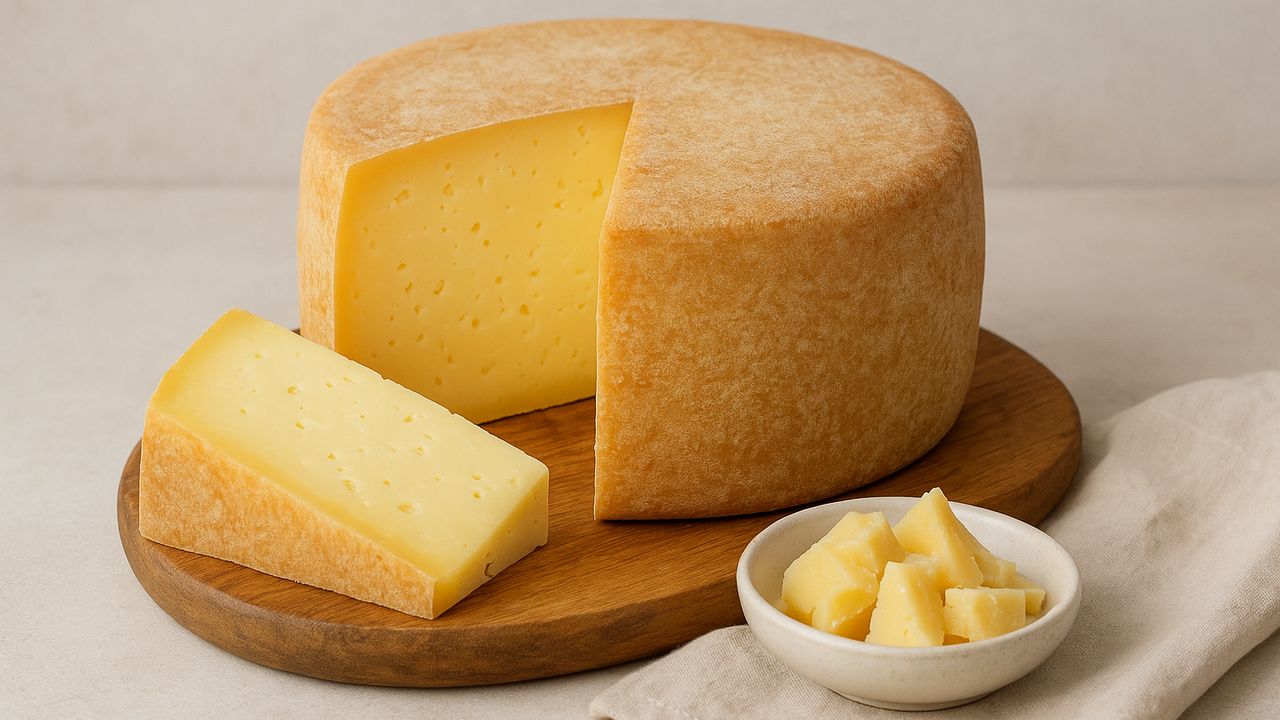
Cheese made in wheel form is mainly about practicality and quality. Wheels store well, handle easily, and give cheese makers a reliable shape for aging.
Over time, cheesemakers kept the wheel format because the outside can dry at a controlled pace while the center matures more slowly. If you’ve ever wondered, Why Is Cheese Made in Wheel Form?, this breakdown covers the production, aging, and market reasons behind it, so you can understand what you’re buying. Explore more on our food blog at Just Eat Up.
Wheel-shaped cheese caught on because it’s a smart match for the way large batches get produced, transported, and sold. The round format is sturdier for stacking, easier to lift, and simple to cut into wedges with consistent portions.
On the production side, wheels also fit neatly into standard dairy workflows. Curds are handled and pressed in set batches, and wheel molds make it easier to manage shape and timing. Once the cheese reaches the right age, retailers know exactly how it will cut and display.
Aging is where the wheel format earns its reputation. The interior mass is thicker, so moisture releases gradually. That slower pace helps the cheese develop flavor depth without the risk of drying out too fast at the outer edge.
I usually start tasting by texture because it tells you how the cheese matured. With wheel cheeses, the outside firms up and stabilizes as the rind develops, while the center stays cohesive longer. That balance often leads to more rounded flavor as the cheese spends more time aging.
Rind development depends on airflow, humidity, and time, and wheels give those factors a stable surface. The outer layer has enough exposure to dry and ferment, while the thicker body helps prevent the cheese from becoming overly dry or cracking too early.
Many wheel cheeses also benefit from surface care during aging. Some producers wash the exterior, brush it, or let a natural rind build depending on the style. A wheel gives a consistent, reliable platform for that work, which supports a more even rind over the whole piece.
Older markets often sold cheese as a whole form because it was the easiest way to keep it fresh. A retailer could cut wedges to order, rather than relying on pre-sliced portions that dried out faster on the shelf.
Wheels also made pricing and display straightforward. A large cheese wheel looks impressive, and wedge cuts are practical for portioning. Even today, many cheese counters keep the wheel tradition because customers like selecting a wedge from a whole cheese and knowing it was cut when they came in.
Block cheese grew faster once refrigeration and industrial packaging improved. Blocks are easy for factories to pack into uniform sizes, wrap neatly, and ship with less waste, which works well for supermarkets and large distribution networks.
Cutting and packaging lines are also built around consistent shapes. For everyday needs like sandwiches, grating, or melting, a block format is convenient and predictable. Wheel cheeses did not vanish, but routine retail supply often favors blocks because they’re simpler to standardize and portion at volume.
Several well-known cheeses are still made in wheel form, including Parmigiano Reggiano and Grana Padano. These are pressed into large rounds and aged for a long time, which supports their signature nutty, savory flavor.
You’ll also find wheel shapes in some washed-rind and bloomy-rind styles, depending on the producer. Wheel formats show up across both hard and semi-hard categories because the aging benefits apply broadly. If you want a wheel, look for labels that include protected origin names, since those producers often follow traditional mold and aging methods.
Cheese made in wheel form continues because it supports controlled aging, steady rind development, and practical handling from dairy to shop. Want to learn how to serve different wheel cheeses, tell good age from dull age, or pick the right wedge for your board or pasta? Visit our food blog on Just Eat Up for more guides and ideas.