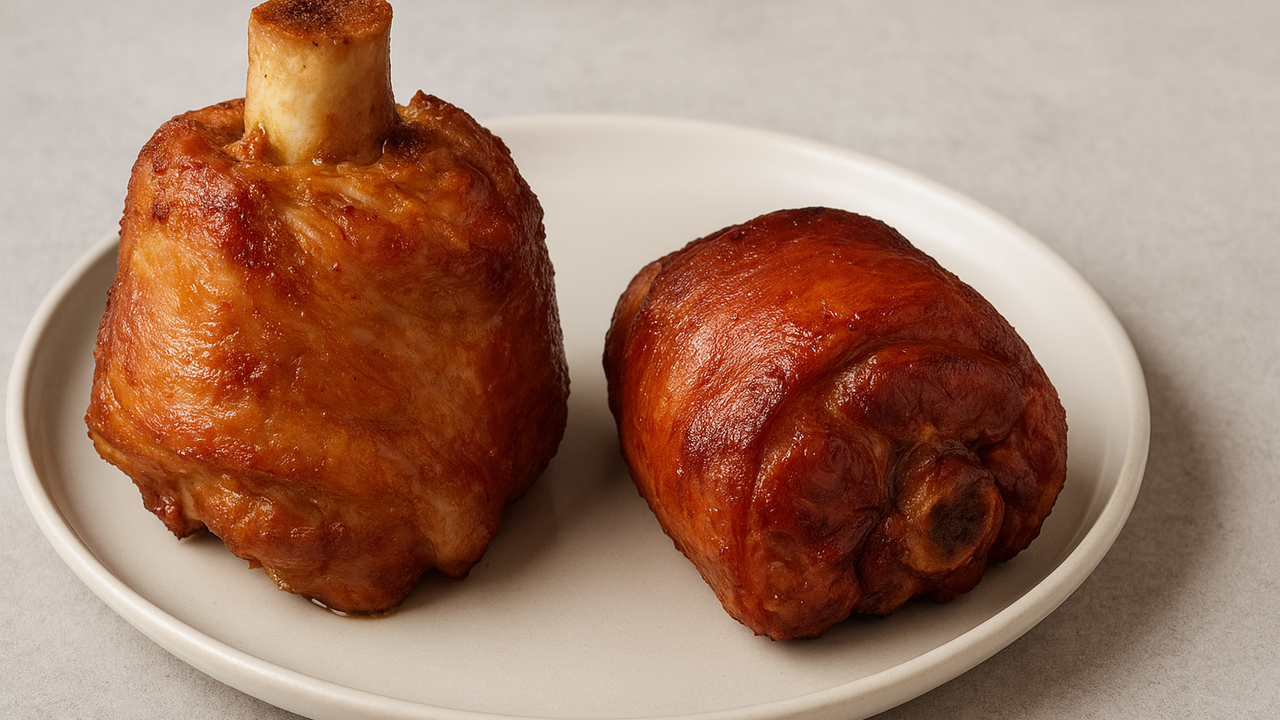
Pork shank vs pork hock is confusing at first, but it matters once you start cooking. Both are lower-leg cuts, yet pork shank usually gives more distinct, carveable meat while pork hock leans toward thick, gelatin-rich broth and tender, spoonable results.
In the kitchen, you can treat pork shank vs pork hock as a choice between “meaty pieces” and “comforting body in the sauce.” Once you know the cut, you can match it to stews, braises, beans, and soups without guessing, and you can get better results fast with help from Just Eat Up and our food blog.
Pork hock is the jointy lower-leg cut, typically taken from just below the shin. It includes bone and connective tissue, and those parts are exactly what make it shine in long, gentle cooking.
When pork hock braises, collagen turns into gelatin, which gives soups and stews a silky, rounded body. I look for pork hock when I want the whole pot to feel rich and satisfying, not just the meat portion.
The biggest difference in pork shank vs pork hock is how the meat behaves around the bone during cooking. Pork shank tends to carry more usable meat, so you get spoonfuls that also include clear, substantial bites.
Pork hock is more joint-forward, which means more gelatin output into the cooking liquid. That makes pork hock great for dishes where the broth or sauce should coat a spoon, especially in bean-heavy meals and classic European comfort food.
If you are judging by meat per portion, pork shank usually comes out ahead. You often get more “carving territory” alongside the bone, which works well when you want pieces you can portion cleanly.
Pork hock can still have plenty of meat, but the cut ratio favors bone, cartilage-like structure, and connective tissue. That is why pork hock is so good for breaking down into the dish, giving you hearty, tender bits that blend into the sauce.
Choose pork shank when your recipe depends on visible pork pieces that hold their shape. Tomato-braised sauces, dark beer stews, and slow roasted preparations benefit from that extra meat content, and a quick sear before braising helps build a deeper flavor base.
Pick pork hock when you want the dish itself to become thicker and more luxurious as it simmers. German-style cabbage, lentil stews, split pea soup, and bean braises love the way pork hock renders gelatin into the liquid, turning a thinner broth into something glossy and comforting.
Knowing pork shank vs pork hock helps you shop smarter and cook with confidence, whether you crave distinct pork pieces or a broth that clings to noodles and bread. For plenty of Chicago-style comfort food ideas, head to Just Eat Up and explore our food blog for recipes that use both cuts.