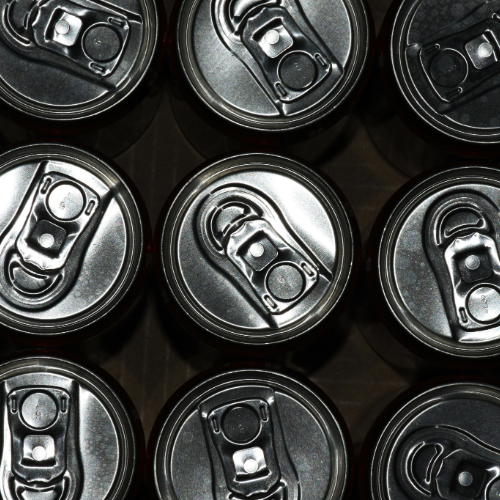
The process of canning coffee at Dark Matter's Chocolate City Coffee Palace and Bodega on Grand Avenue is a fascinating blend of tradition and innovation. It starts with freshly roasted and ground coffee beans being placed in a giant paper filter, followed by the addition of 200-degree water to unlock the precious flavor compounds. This isn't your typical 'cold brew,' but rather 'coffee cold,' a linguistic distinction that reflects the unique approach embraced by Dark Matter.
After brewing, the coffee is rapidly chilled through a sophisticated system of parallel tubes, counterflow, and heat exchange. It's then briefly stored in a 50-gallon refrigerated kettle before moving to the canning line. The cans are meticulously labeled and filled with nitrogen to preserve freshness, and the entire process is subjected to rigorous sanitation. The result is a consistently high-quality product that smells wonderfully roasty even after extensive cleaning.
Who buys these single-serving cans of black coffee? According to Robert "Bob" Quinlan, president of Dark Matter, cans are more popular in grocery stores, restaurants, and online rather than selling well at their cafes. He believes that young people, in particular, are potential customers. "If they're exposed to (cans) when they're exposed to coffee, is this going to be their go-to instead of hot?" Quinlan mused. "I don't know. I'm too old."
Ready-to-drink (RTD) coffee has become the third most popular form of coffee drinking among daily drinkers since the pandemic, rising from 8% to 15% of coffee drinkers' preferred preparation, according to the National Coffee Association's Coffee Data Trends for spring 2024. However, customer recognition is still lagging. Whitney Baldwin, assistant manager at Ancient Grounds, notes that no customer has ever asked for cold brew in a can.
Quinlan is brimming with optimism about the potential for growth in the canned coffee market. 'We want to expand in this area, and we have seen significant growth since we started canning.' Other local roasters such as Big Shoulders, Metropolis, Metric, Intelligentsia, and Beatrix are also getting involved in the canned coffee market, often partnering with co-packers like Sip Factory or Snapchill.
Canned coffee is not a new concept. It was first introduced by the Japanese company UCC in the 1960s, and Starbucks entered the U.S. market in 1996 with bottled Frappuccinos. However, the trend is now being embraced by "third-wave" producers who focus on specialty coffee graded at the highest levels.
The market for canned coffee is growing in Chicago, and local specialty roasters see it as an opportunity for brand recognition and customer development. Metric's head roaster, Hara Kumaran, mentioned that the company started experimenting with canned coffee in 2015 and now partners with co-packers like Snapchill. Justin Hignight, head brewer and production manager at Dark Matter, emphasized the importance of sanitation in the canning process, stating that the equipment must be cleaned thoroughly to avoid contamination.
Ready-to-drink (RTD) coffee offers convenience and a consistent product that can be shared in various contexts, from refrigerators to grocery store shelves. This trend allows specialty roasters to expand their reach and connect with new customers. Tyrone Banks, co-owner of Drip Collective, observed a growing demand for cold coffee bottles, with 437 bottles sold in June 2024 alone.
Challenges remain, including food safety concerns and the need for rigorous sanitation. The recent recall of Snapchill’s canned products due to process filing issues highlights the industry's growing pains. However, companies like Metric plan to continue working with Snapchill, emphasizing that no contamination was found.
As the canned coffee market expands, national players like La Colombe, acquired by Chobani in December 2023, are also targeting Chicago. With outsized popularity for cold brew in the Windy City, La Colombe’s chief marketing officer Kathryn O’Connor notes that Chicago is a cold coffee-obsessed market, accounting for a significant portion of their sales.
Chicago's reputation as a coffee roaster-centric city makes it a fertile ground for innovation and competition in the canned coffee market. As local and national players continue to invest in this growing sector, canned coffee is poised to become a staple in the city's vibrant coffee culture. You can find more analysis about these markets at Stocks & NFTs.