


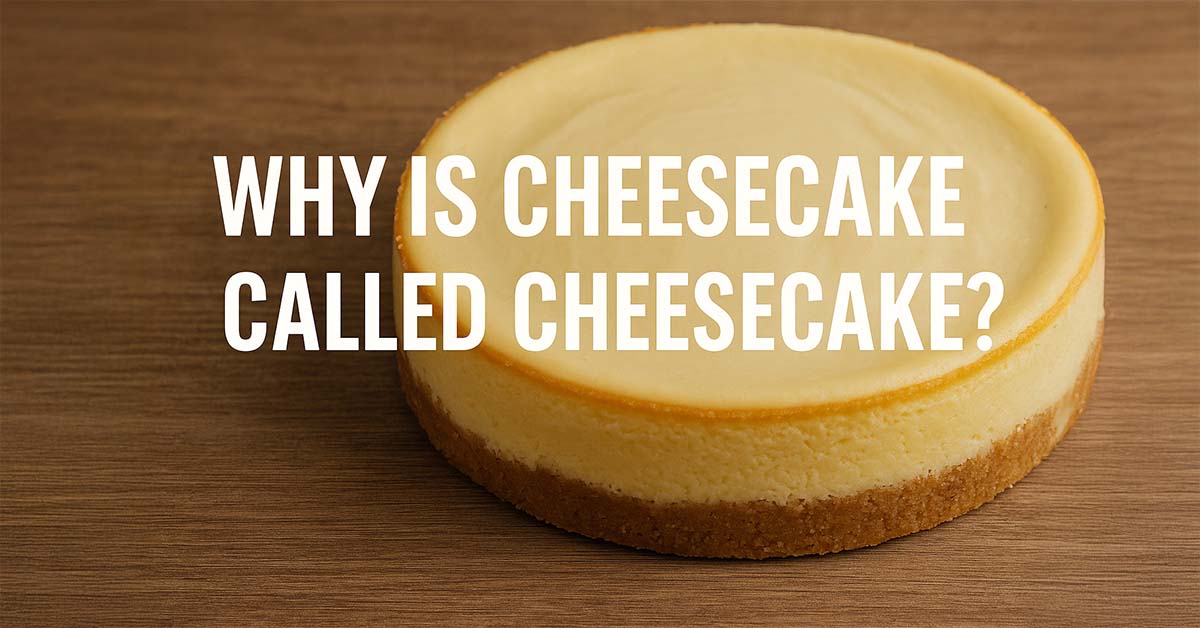
Cheesecake is called cheesecake because it contains cheese and was historically labeled as a cake due to its shape and sweetness, even though it’s more like a custard or pie. You ever sit down with a slice of rich, creamy cheesecake and think, wait... why is this called cake? Because it’s not. Not really. It doesn’t rise like cake, it doesn’t have layers or frosting, and it’s not fluffy in the slightest.
It’s honestly more like a chilled custard or a pie that decided to go by a different name. But somehow, the name "cheesecake" stuck, and people around the world just rolled with it. Once you start digging into cheesecake history, you realize that it’s had a very long, very weird journey that crosses continents, cultures, and plenty of kitchen experiments.
Let’s get into why it’s called cheesecake, who started this whole thing, and how we ended up with so many versions of one not-so-cake.
The word “cheesecake” started showing up in English writing around the 15th century. But desserts made with cheese have been around for thousands of years. The Greeks were doing it before there were even ovens in kitchens. Their early version of cheesecake was made from pounded cheese, wheat flour, and honey. They’d shape it into flat rounds and bake it on heated stones.
The Romans borrowed the idea after conquering Greece. They added eggs and started baking it in more structured pans, calling it libum. It was offered to the gods, served at banquets, and became a necessity for people like me for celebrations.
Eventually, the recipe made its way across Europe. By the Middle Ages, the word “cake” was used more broadly. It didn’t mean what we think of now. Anything round, sweet, and baked could qualify as a cake, whether it was a sponge or not. So once a cheese-based dessert hit English kitchens, the name “cheesecake” wasn’t too much of a stretch.
That’s how the name started. It made sense at the time. It just stuck around, even when the dessert kept changing. That moment in cheesecake history marked the beginning of its modern identity.
In the U.S., the answer is almost always cream cheese. But that wasn’t always the case. Before cream cheese took over the dessert world, people were using whatever soft cheese was common in their region. That includes:
Cream cheese didn’t show up until the 1800s. A dairyman in New York accidentally made it while trying to replicate French Neufchâtel. His mistake turned into a richer, silkier cheese that eventually became Philadelphia Cream Cheese. That launch set the stage for what we now know as New York-style cheesecake.
Cheesecake history shifted with the arrival of cream cheese. It changed the texture, the flavor, and how Americans thought a cheesecake should taste.
Because it’s not made like regular cake. Cheesecake doesn’t rely on flour or whipped egg whites to rise. Instead, it’s made by combining soft cheese with sugar, eggs, and sometimes cream or sour cream. The batter is thick and rich. It’s poured into a crust and baked slowly at a low temperature to prevent cracking.
Instead of rising, it sets. Think more like custard or panna cotta. The final texture is dense, creamy, and melt-in-your-mouth. If you tried to make it fluffy, it wouldn’t be cheesecake anymore.
So no, it’s not light like birthday cake. It’s supposed to hit like a brick of joy. That density is part of what defines American cheesecake history.
Cheesecake history begins in Ancient Greece. Around 2000 BC, people on the island of Samos were already making primitive versions of cheesecake. Archeologists found cheese molds and baking tools that suggest this dessert was around long before anyone wrote down a recipe.
Greek athletes were reportedly given cheesecake as an energy booster during the first Olympic Games. It was considered a source of strength. Simple, sweet, and satisfying.
Once the Romans arrived, they adopted the recipe and gave it their own spin. They added eggs and called it libum, baking it for religious offerings and elite events. From there, the dish traveled across Europe, picking up new ingredients and techniques.
By the time it reached England and France, cheesecake was being flavored with citrus, dried fruit, or spices. This is where it got less of a ritual food and more of a treat for special occasions. That era cemented cheesecake's place in culinary history and helped preserve the tradition.
No single person invented cheesecake, but William Lawrence of Chester, New York played a big role in the modern version. In 1872, he accidentally created cream cheese while trying to replicate a French soft cheese. That accident changed everything.
Soon after, Philadelphia Cream Cheese became a household name. By the early 1900s, bakeries in New York were using it to make what became the famous New York-style cheesecake. That version had a graham cracker crust, no fruit inside, and a silky, creamy filling that held its shape.
Arnold Reuben, a German-Jewish immigrant and restaurateur, is often credited with popularizing this version. He served it in his restaurants and helped establish it as a classic American dessert. His influence is a major part of cheesecake history in the United States.
Cheesecake doesn’t look or taste the same everywhere. Different cultures use different cheeses, different methods, and different names. Here are a few examples:
Each version is shaped by regional ingredients and tastes. And not every country calls it "cheesecake" unless they’re directly copying the American style. The global evolution of this dessert is a big part of cheesecake history.
You love cheesecake. We love cheesecake. So we made shirts about it. Our original cheesecake-themed t-shirts celebrate the dessert’s past, present, and sticky-fork future. Whether you’re into New York-style slices or ricotta-based classics, we’ve got a design for you.