


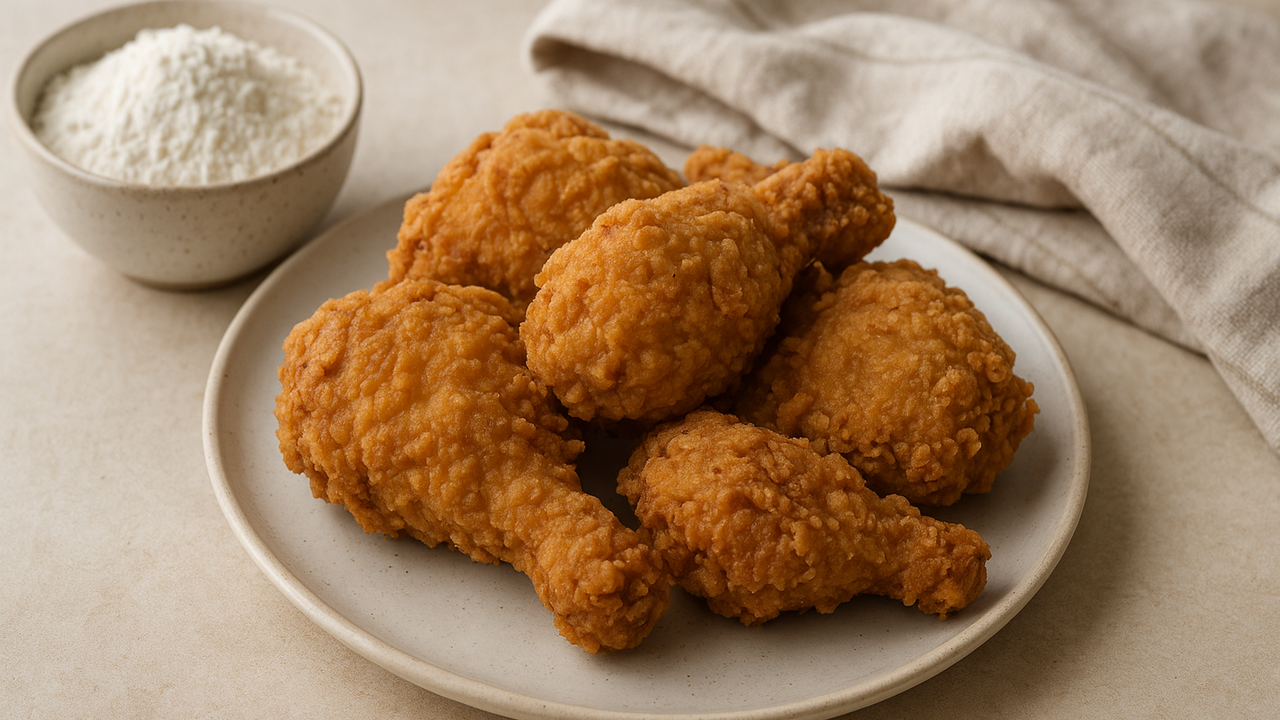
If you're wondering what is the best flour for fried chicken, start with all-purpose flour as the reliable base. It builds a sturdy, golden crust that stays crisp as the meat rests. A common home method is to dredge the pieces twice to add texture and ensure the crust clings. The real trick is balance—flour choice is just one part of a crispy, juicy finish. You’ll get consistent results by respecting the coating and the fry, plus letting the crust set before you start cooking. I usually look for texture first because that tells you a lot about how the dish was made.
For extra crunch, many cooks blend in rice flour or cornstarch, and a pinch of baking powder helps lift the crust. Rice flour yields a lighter bite that stays crackly in the coating. Cornstarch boosts crispness, especially when used with a second flour. If you want deeper guidance on what is the best flour for fried chicken and how to mix for maximum snap, check out Just Eat Up.
All-purpose flour is the go-to base because it has enough gluten to give structure without weighing down the crust. It browns evenly and forms a coating that stays solid against juicy meat. For many home cooks asking what is the best flour for fried chicken, AP flour becomes the default because it delivers predictable results in a familiar kitchen, with easy seasoning and handling.
To push extra crisp without drying out the interior, many cooks blend in cornstarch or potato starch, and sometimes a pinch of baking powder or a little rice flour for a thinner, delicate layer. The goal is a crust that bites cleanly, not a soggy shell. If you want a reliable starting point while exploring what is the best flour for fried chicken, start with AP flour and tweak from there.
Is Rice Flour Better for Extra Crispy Fried Chicken?
Rice flour delivers a lighter, crisper bite than standard flour and is gluten-free, making it appealing for some cooks. It shines on wings or boneless pieces when you want a thin, crackly crust that still coats well. If you're chasing what is the best flour for fried chicken, consider the effect of a rice flour layer: it can disappear into the fry and let the meat shine through rather than weigh the crust down.
However, 100% rice flour can be too fragile by itself, so many cooks reach for a blend with all-purpose flour or a touch of cornstarch. The combination gives you the delicate snap rice flour provides while maintaining enough body to hold up to juices. If you are weighing what is the best flour for fried chicken, a rice flour–AP blend is a common, dependable option.
Should You Mix Different Flours for Fried Chicken?
Blending flours is a straightforward way to dial in texture. A typical starting point is two parts AP flour to one part rice flour, with a teaspoon of cornstarch per cup to increase bite and moisture absorption. This approach helps balance heft with lightness while answering what is the best flour for fried chicken for many kitchens.
Adjust the ratios based on how heavy or light you want the crust to be. If you like a sturdier bite for dark meat or longer frying, tilt toward AP flour; if you want a crisper, thinner coat for wings, lean toward rice flour. The key is to rest the coated chicken briefly so the coating sets before it hits the hot oil.
Chickpea flour adds a nutty edge and works well in gluten-free blends, bringing depth without removing bite. Fine corn flour also contributes a subtle sweetness and a pale, delicate finish that many cooks appreciate.
Other options include cornmeal for a grittier crunch, masa harina for a tortilla-like sheen, or potato starch for a super light crust. If you switch flours, adjust the seasoning and let the coated pieces rest for a minute so the coating sets before frying. This small step helps the flavors settle into the crust.
Texture, crispiness, and flavor hinge on flour. All-purpose flour yields a reliable crust with good chew and structure, while rice flour brings a lighter snap that crackles under pressure. Blends can deliver the best of both worlds, guiding you toward the exact bite you want.
Beyond flour, temperature matters: keep oil steady around 350F to 365F, work in batches, and let the coating set before a second fry if you use double-dredge methods. Humidity, resting time, and the thickness of the coating also factor in, shaping how evenly the crust browns and how it clings to juices.
Ready to broaden your fried chicken toolkit? Our food blog explores coatings, spices, and regional twists that change how the crust looks and tastes, from extra-crisp finishes to deeply seasoned layers. Dive into tested methods, compare results, and pick a route that matches your kitchen. For more ideas and practical tips, Just Eat Up.