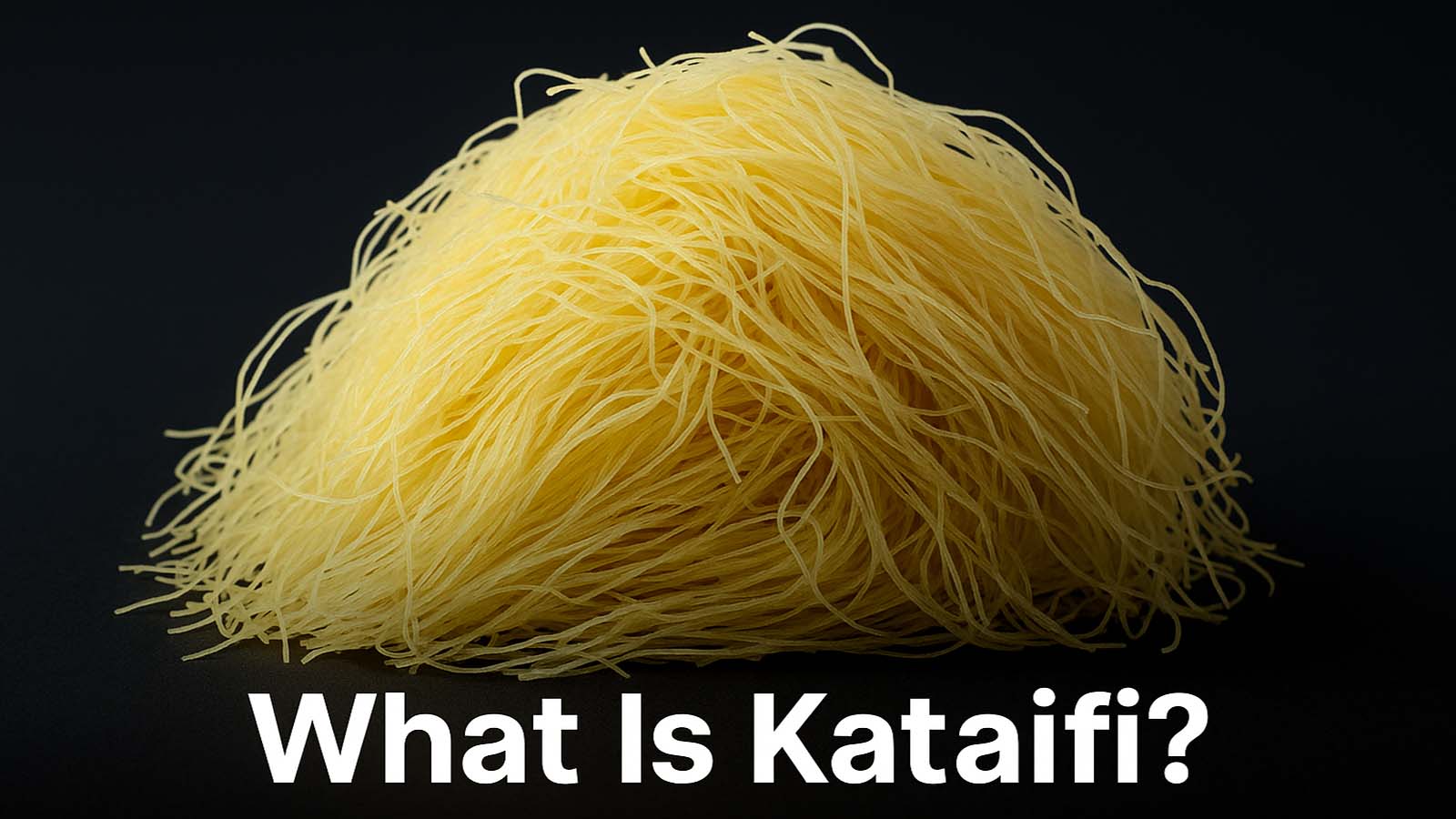
Kataifi dough is a pastry made of fine, threadlike strands that look almost like shredded wheat. It comes from the same family as phyllo, but instead of smooth sheets, it is spun into delicate strings. When baked, those strands crisp up into a golden, crunchy web that can wrap around nuts, cheese, or cream fillings. The beauty of Kataifi dough lies in its texture. It holds sweet syrup without going soggy, yet it still crackles when you bite into it.
The best way to picture it is to imagine phyllo turned into vermicelli. It’s light, airy, and versatile. You’ll find it in Greek, Turkish, and Middle Eastern desserts, though creative chefs also use it in modern savory recipes. If you’ve been curious about how this same dough shows up in viral desserts, you might want to check out our guide on what’s in Dubai chocolate for a sweet example.
The story of Kataifi dough stretches back centuries. Its origins are tied to the regions where phyllo itself was born, around Greece and the Ottoman Empire. Food historians trace it to kitchen experiments where bakers tried new ways to stretch and shape wheat batter. Instead of spreading thin sheets, cooks drizzled the mixture in thin threads on a hot plate, discovering a whole new texture.
Over time, Kataifi became a star in sweet pastries. It fit perfectly with local traditions of combining nuts, honey, and syrup. Families passed down recipes through generations, and the dough spread across cultures, appearing in both home kitchens and bakeries. Today it stays a signature ingredient for holiday desserts and festive tables And just as Kataifi traveled, so did new traditions like the Dubai chocolate bar. If you’ve ever wondered where that dessert really comes from, we’ve explored its origins in detail.
Kataifi dough is most famous for its role in syrup-soaked sweets. One classic treat is simply called Kataifi, where chopped nuts like pistachios or walnuts are rolled inside the shredded dough, baked, then drenched in honey syrup.Another is ekmek kataifi, a rich layered dessert topped with custard and cream.
In Turkey, you’ll see künefe, a cheese-filled pastry that uses Kataifi on both sides of melted, stretchy cheese, then gets soaked in syrup and sprinkled with pistachios. The combination of crisp dough, warm cheese, and sweet syrup is unlike anything else.
Modern pastry chefs also get playful with Kataifi dough. They shape it into nests for fruit, wrap it around shrimp for savory appetizers, or even use it as a crunchy topping for ice cream. If desserts like this catch your eye, you’ll probably enjoy trying our Dubai chocolate cheesecake recipe, which borrows inspiration from the same tradition of layering texture with rich fillings.
Kataifi dough is easier to find than you might expect. Most Middle Eastern, Greek, or Turkish grocery stores carry it in the freezer section. Larger specialty markets often stock it alongside phyllo sheets. If you don’t have a local store nearby, online shops make it simple to order.
When buying, check the packaging for freshness. Kataifi dough should be stored frozen until you are ready to use it, and thawed gently in the fridge overnight. Once thawed, it becomes more delicate, so you’ll want to handle it carefully. And if you’re already shopping online for unique sweets, you can even order Dubai chocolate gifts from specialty shops to pair with your homemade Kataifi creations.
Storing Kataifi dough is all about keeping it from drying out. If you buy it frozen, leave it sealed and keep it frozen until the day before you need it. Move it to the fridge overnight to thaw. Do not thaw it on the counter, or it may get gummy.
Once open, cover any unused dough with a slightly damp towel and plastic wrap, then refrigerate it. Try to use it within two days for best results. If you have extra baked Kataifi pastries, store them in an airtight container at room temperature, since refrigeration can make them lose their crunch.
Making Kataifi dough at home is tricky but not impossible. The dough itself uses the same ingredients as phyllo: flour, water, and a little cornstarch or oil. The challenge comes in creating the thin strands. Traditional machines drizzle the batter in hair-thin lines over a hot plate, forming the signature threads.
Home cooks have improvised with squeeze bottles or pastry bags, piping the batter onto a skillet. It takes practice, but you can get a rustic version that still works for wrapping fillings. If you’re a kitchen tinkerer, trying it yourself is a fun project. But for most people, buying ready-made Kataifi dough is the easier option. If you love DIY projects like this, you may also like experimenting with making Dubai chocolate bars at home, another recipe we’ve broken down step by step.
Dubai’s viral chocolate dessert gained attention online for its over-the-top layers of indulgence. At its heart, Kataifi dough plays a big role. The shredded pastry strands form the crispy outer layer that gives the chocolate bar its signature crunch. Wrapped around a gooey chocolate and hazelnut filling, then covered in syrup or sauce, the result is both crunchy and rich.
This creative use of Kataifi shows how adaptable the dough is. A pastry that once lived mostly in traditional Greek or Turkish sweets has found its way into global viral desserts. It proves that classic ingredients can always find new life in modern food culture. And if you’re wondering whether this treat is gluten free, we’ve got that covered too.
Kataifi and phyllo dough share the same base ingredients, but their forms are completely different. Phyllo is rolled into paper-thin sheets that can be layered to create baklava or spanakopita. Kataifi, on the other hand, is spun into strands.
Because of this, Kataifi dough is better for wrapping around fillings and creating crispy textures. It absorbs syrup differently too, staying crisp even when drenched. Phyllo gives you flaky, layered pastries, while Kataifi delivers crunch and lightness in every bite. Both are beloved in Mediterranean and Middle Eastern cooking, but they serve different creative purposes.
Kataifi dough may look unusual, but it’s a staple that deserves a spot in your foodie vocabulary. From its centuries-old history to itss role in viral modern desserts like the Dubai chocolate, it continues to honestly surprise me with its versatility. Whether you buy it frozen, try making it from scratch, or taste it in a local bakery, you’ll see why so many peeps and cultures keep it close to their hearts.
If your curiosity goes beyond Kataifi, explore our other features on Dubai chocolate, from what’s in it to how to recreate it in your own kitchen. Just Eat Up is all about diving into the flavors, stories, and traditions that make food exciting.