


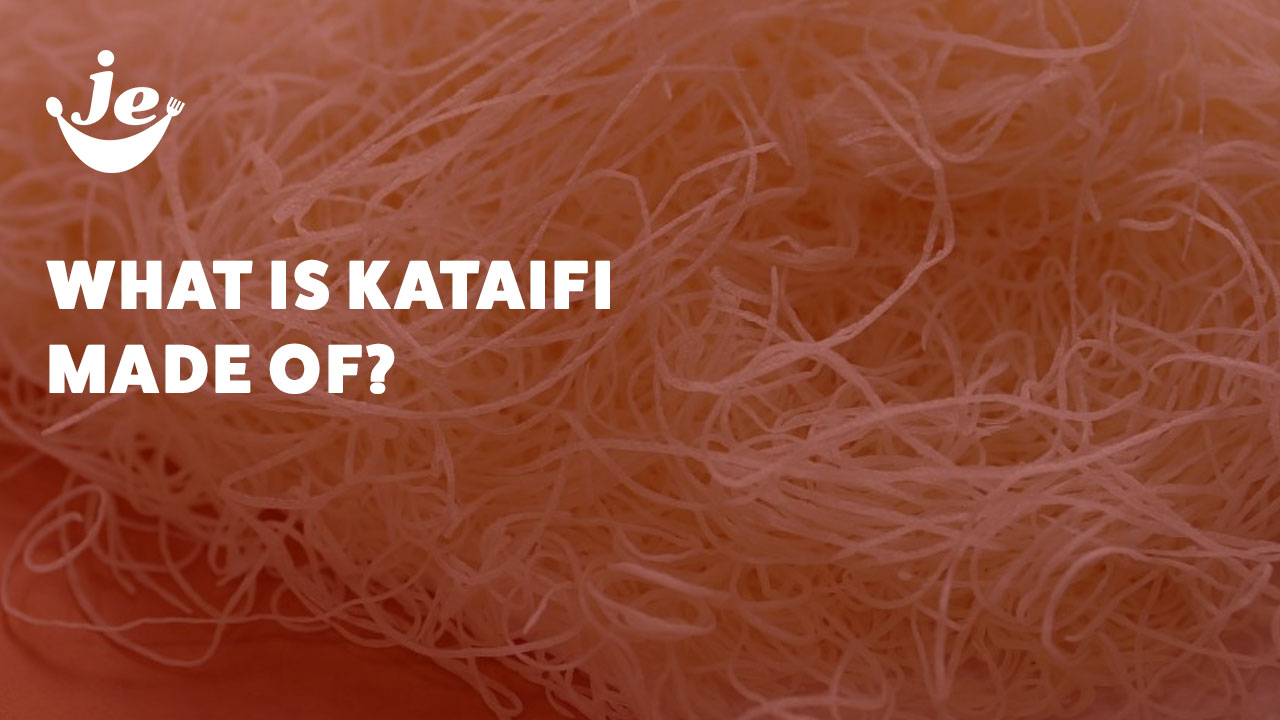
Kataifi dough looks fancy, but it’s actually pretty simple once you know what it’s made of. It’s kind of amazing how just a few everyday ingredients can turn into those thin, golden strands that bake up crispy and light. Kataifi has been around for centuries, finding its way into syrupy Greek pastries, Turkish cheese desserts, and even modern viral treats like Dubai chocolate. But before it became the star of fancy sweets, it started as one of the simplest doughs ever made.
Kataifi dough comes down to just three ingredients: flour, water, and a bit of oil or cornstarch. That’s the whole story. No sugar, no eggs, no secret spices hiding in there. The magic lies in how these three are combined. The flour gives the dough its backbone, the water turns it into a smooth batter, and the oil or cornstarch helps it stay elastic and silky.
Most traditional recipes use finely milled, high-gluten flour. It stretches beautifully and holds shape when cooked. A pinch of salt helps bring the flavors forward, and sometimes you’ll see lemon juice added for a cleaner taste. It’s the kind of recipe that looks plain on paper but surprises you once you start working with it. You can think of Kataifi as phyllo dough’s shredded cousin, built for crunch instead of flakiness.
The real secret to Kataifi isn’t the ingredients, it’s the technique. You don’t roll this dough out like you would for pie crust. You spin it. The batter gets poured in hair-thin lines over a hot metal plate, cooking instantly into strands that look almost like angel hair pasta.
The process sounds simple, but it’s all about timing. Too much batter, and it clumps. Too little, and it breaks apart. Skilled bakers move fast, creating perfect webs of dough in seconds. Those threads cool quickly, then get gathered into piles ready for wrapping around fillings or layering into desserts.
What’s happening behind the scenes is pure food science. The starches in the flour react to heat and set immediately, forming that crisp, net-like texture. It’s why Kataifi holds syrup so well without turning soggy. The dough traps air between its layers, giving you that perfect crunch on the outside and softness in the middle.
Depending on where you eat it, you might notice Kataifi isn’t always the same. In Greece, some cooks add a spoonful of semolina flour. It gives the dough a little grit and helps it stay firm when soaked in syrup. In Turkey or Lebanon, cornstarch is more common. That version feels smoother, lighter, and breaks apart with a delicate snap when baked.
It’s fascinating how a small change in ingredients completely transforms the result. The Greek version tastes heartier and stands up to nut fillings, while the Turkish version almost melts in your mouth. Both are delicious, just made for different moods.
Before machines took over, Kataifi was made one batch at a time on wide, heated metal plates. The batter was poured from a small spouted pot in steady circles, creating ribbons that cooked instantly. Once the layer looked dry enough, it was lifted with long sticks and folded into loose bundles.
Each batch had to be perfect—light, even, and soft. It’s a slow rhythm that bakers used to master over the years. If the heat was too high, the dough would burn before it cooked through. Too low, and it stayed gummy. The best batches came out pale gold, ready to be wrapped around chopped pistachios, almonds, or cheese before baking.
Today, most people buy Kataifi frozen, which saves hours of work. But even so, there’s something satisfying about knowing every strand started as a drizzle of simple batter.
Walk into a modern Greek bakery and you’ll see machines doing what used to take three people. Dozens of thin nozzles release streams of batter onto rotating plates, creating hundreds of strands at once. These machines make it possible forKataifi to reach markets all around the world.
Once spun, the dough cools fast and is packed into rolls or nests before freezing. The freezing process keeps it freshwithout losing texture. That’s why even frozen Kataifi can taste like it came straight from a local bakery—if you handle it right. Just thaw it in the fridge overnight, never on the counter, and it will be soft, pliable, and perfect for your next dessert.
When you think about how far it’s come, it’s wild that something so ancient is still being used in new desserts like Dubai chocolate. Tradition meeting creativity always makes food more interesting.
Since Kataifi is all about texture, freshness is everything. Always buy it from the freezer section, not the fridge. Check the packaging for any frost buildup or broken strands. That’s a sign it may have thawed and refrozen, which makes it dry and brittle.
When you get it home, keep it sealed until you’re ready to use it. Once open, wrap the unused dough in plastic and cover it with a damp towel to keep it soft. If you’re baking, brush the strands with melted butter or ghee before filling them—it helps every piece brown evenly and stay crisp.
Good Kataifi should separate easily when you pull it apart. If it feels clumpy or sticky, it’s probably past its prime. And don’t forget: a light drizzle of syrup or honey after baking brings the texture to life.
Kataifi plays well with just about everything. Sweet or savory, it’s all fair game. Classic versions are filled with crushed nuts like walnuts or pistachios and baked until golden before being soaked in syrup scented with cinnamon or rose water. That combination of crunch, spice, and syrupy sweetness never gets old.
On the savory side, cooks use Kataifi as a crispy wrap around shrimp or feta cheese. The result is crunchy outside, creamy inside, and absolutely addictive. Some restaurants even layer it under custards or sprinkle it over ice cream for a fancy twist.
You’ll also spot it showing up in newer desserts, especially the ones coming out of Dubai’s dessert scene. The viral Dubai chocolate bars use Kataifi to add that irresistible crunch around a molten chocolate center. It’s proof that old-school ingredients still have plenty of room in modern kitchens.
Traditional Kataifi is made with wheat flour, which means it’s not gluten-free. The gluten helps the dough stay stretchy and strong so it can form thin strands without breaking. Some bakeries are actually making gluten-free versions using rice or tapioca starch. They work ok, but they don’t really have the same chewy texture as the OG.
If you’re curious about which desserts are safe for gluten-free diets, we covered this topic in our post on whether Dubai chocolate bars are gluten-free. Kataifi usually isn’t one of them, but the good news is it’s low in fat and doesn’t needany frying, so it’s still a lighter treat than many pastries.
Kataifi is made with very basic ingredients but changes names south of Cyprus and means a lot in many cultures.Kataifi is a Greek expression of hospitality. Families make Kataifi rolls for dessert during the holidays, and the kitchen smells of nuts and honey. In Turkey, the pastry is used for a dessert called künefe, drying the pastry around melted cheese and syrup to form an unusual combination of sweet and savory.
It’s easy to see why the tradition stuck around. Kataifi connects generations. It’s made from the same ingredients people have used for hundreds of years, but every family puts their own spin on it. Now, modern chefs are pushing that tradition forward, using the same dough in luxury desserts that trend across the world.
Kataifi might start with flour and water, but it’s so much more than that. It’s a piece of culinary history that’s still inspiring modern desserts today. Every strand tells a story of patience, precision, and a love for texture that has traveled across cultures.
If you’re as fascinated by the creative side of pastry as we are, check out our features on Dubai chocolate, like what makes Dubai chocolate expensive and how it gets that glossy finish. Just Eat Up dives deep into the stories and flavors behind every dish worth talking about.
Because at the end of the day, food isn’t just about recipes. It’s about where they come from, who shares them, and the little surprises that happen when old traditions meet new ideas. Kataifi proves that even the simplest ingredients can build something unforgettable.