


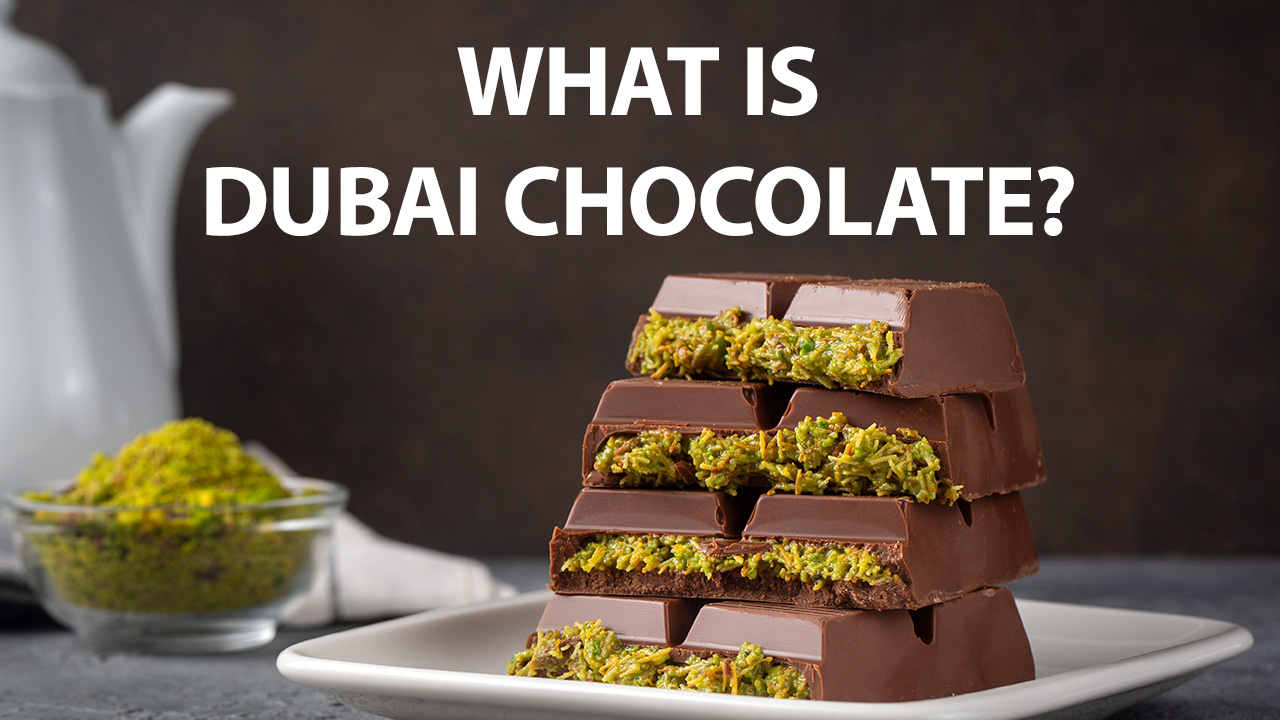
Dubai chocolate is a luxurious and often viral style of chocolate that typically blends traditional Middle Eastern ingredients, like pistachios, knafeh, tahini, and dates, with high-quality chocolate. Known for its rich textures and eye-catching presentation, famous Dubai chocolate bars are often filled with green pistachio cream, flaky pastry layers, and sometimes even gold leaf. The outer shell is usually premium milk or dark chocolate, and the interior often contains a gooey or layered filling that reflects Dubai’s culinary emphasis on indulgence and decadence.
What sets Dubai chocolate apart is the combination of rich flavor and cultural fusion. Rather than sticking to classic Western chocolate styles, Dubai-based chocolatiers often draw from regional desserts like baklava, halwa, and knafeh to inspire new kinds of chocolate confections. The result is a dessert that not only tastes unique but also looks ornate, making it a hit across social media platforms.
Dubai chocolate gained international attention in 2021 when Sarah Hamouda, a British-Egyptian chocolatier based in Dubai, launched the now-famous "Can't Get Knafeh of It" chocolate bar through her boutique, Fix Dessert Chocolatier. Inspired by pregnancy cravings, she combined knafeh (a Middle Eastern shredded phyllo dessert), pistachio cream, and chocolate to create a one-of-a-kind product. Its viral success on TikTok and Instagram turned her small local creation into a global trend.
This innovation sparked a wave of copycat products and gourmet spins across the world. Today, famous Dubai chocolate is more than a single bar—it has become a genre of high-end confectionery. While other brands have attempted their ownversions, the original Dubai chocolate is still considered the gold standard. The city’s reputation for excess and luxury helped cement its position in the global dessert scene.
The main difference between Dubai chocolate and regular chocolate lies in the ingredients, cultural influence, and presentation. Dubai chocolate includes traditional Middle Eastern components like pistachio paste, knafeh crusts, date fillings, rosewater, and tahini. These elements add complexity, texture, and a unique flavor profile that contrasts with the more straightforward milk, dark, or white chocolates commonly found elsewhere.
Famous Dubai chocolate is also known for its lavish design. While regular chocolate bars are often uniform and minimalist, Dubai chocolates may include colorful layers, drizzles, edible gold, or ornate packaging. The texture is another point of difference—expect creamy centers, crunchy layers, and soft pastry-like elements instead of just a solid bar.
Dubai chocolate is also more artisanal in nature. Most options are handmade in small batches, using carefully sourced ingredients. This gives it a level of craftsmanship and exclusivity not often seen in mass-market chocolate products.
Most traditional Dubai chocolate is not gluten-free because it often contains knafeh, which is made with shredded phyllo dough derived from wheat. As a result, anyone with gluten sensitivity or celiac disease should be cautious when trying famous Dubai chocolate.
However, the rise in dietary preferences has led to alternative recipes and gluten-free adaptations. Some Dubai chocolatiers now offer gluten-free versions using rice noodles, gluten-free phyllo substitutes, or skipping the pastry element altogether. If you're purchasing from a store or online, always check the ingredients list or confirm with the seller.
If you're making it at home, you have complete control. Several popular DIY recipes now cater to gluten-free audiences, replacing traditional pastry with crushed nuts or alternative grains. That said, most of the viral or store-bought versions still contain gluten, so make sure to read the packaging.
Dubai chocolate is expensive due to a combination of premium ingredients, handcrafted production, ornate packaging, and high demand. It reflects Dubai’s general approach to food and luxury, where quality and presentation are just as important as flavor.
So while it may seem overpriced, you’re not just buying a chocolate bar—you’re buying a luxury experience.
You can find famous Dubai chocolate in both physical boutiques and online shops. The most iconic place is Fix Dessert Chocolatier in Dubai, the originator of the viral chocolate bar. If you're in the UAE, visiting their store is a must.
For international buyers, there are a few options:
Some high-end chocolatiers around the world are now offering their own versions. For example, luxury chocolate brands in London, New York, and Paris have launched pistachio-knafeh-inspired products under different names, but clearlyinfluenced by the original.
Lastly, if you’re unable to find it nearby, consider making your own. Recipes are widely available, and the ingredients—while luxurious—can be found in most international supermarkets. DIY versions give you the freedom to adjust for dietary preferences and experiment with fillings.