


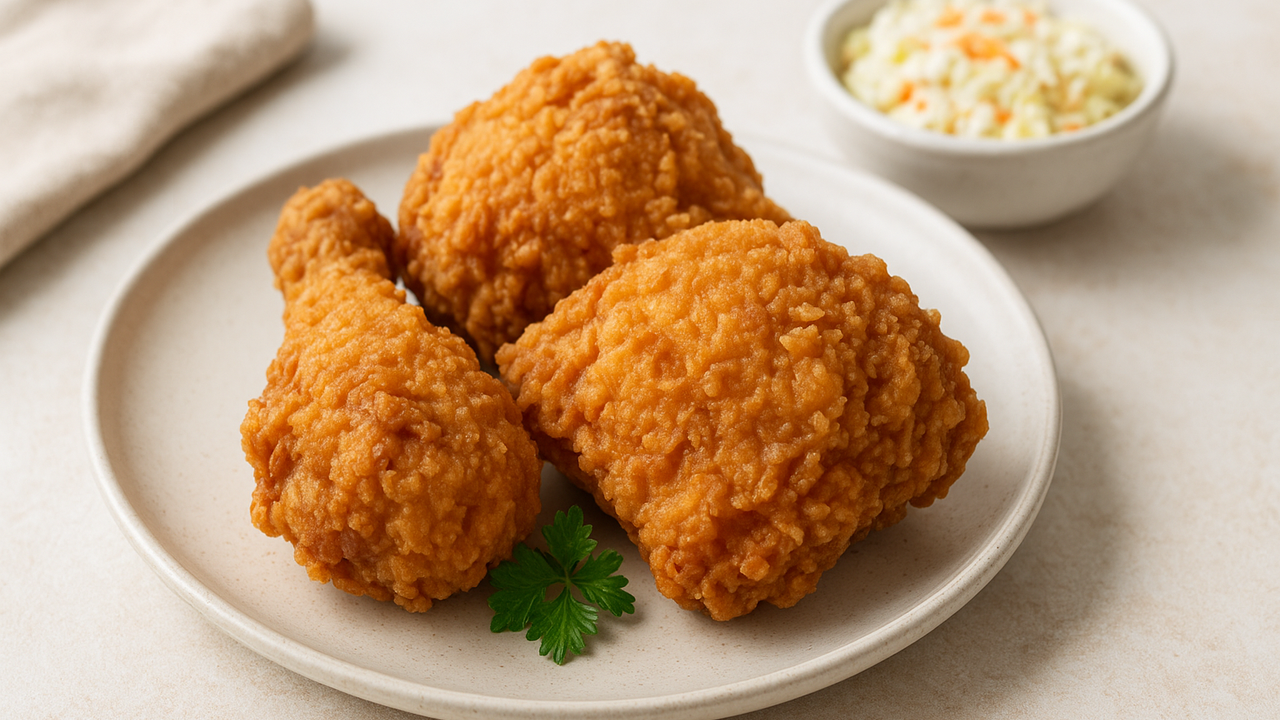
If you’re wondering how many calories are in a fried chicken, use these quick ranges to estimate energy by cut and size. A fried chicken breast with skin usually runs about 360 to 400 kcal per piece, a fried wing about 100 to 160 kcal, and a fried thigh around 310 to 350 kcal. For a typical 140 g piece, expect roughly 377 kcal, and by weight the range sits around 210 to 240 kcal per 100 g depending on oil retention and crust thickness. Dark meat carries more fat, so it tends to log higher calories than white meat. I usually look for texture first because that tells you a lot about how the dish was made.
Understanding how cooking and coating affect calories helps you enjoy fried chicken while staying mindful. If you want more practical ideas to keep flavor while trimming energy, Just Eat Up or our food blog can guide you.
A fried chicken breast with skin typically clocks in around 360 to 400 kcal per piece. For a common portion around 140 g, the average is about 377 kcal. By weight, you’ll often see roughly 210 to 240 kcal per 100 g, depending on how much oil the crust holds and how thick the breading is. If you ask how many calories are in a fried chicken breast, you’ll find the range stays in this area, with white meat staying a touch lighter than dark. Texture, crust density, and cooking time can nudge the total by a few calories.
Wing portions vary, but a fried chicken wing typically comes in around 100 to 160 kcal. If you want to know how many calories are in a fried chicken wing, you’ll still land in that range even as size differs. The smallest wings sit toward the lower end, while larger, breaded wings with extra crust push toward the higher end. Coating thickness and frying duration shift the total, but the wing remains a lighter portion compared with larger pieces.
A fried chicken thigh with skin is roughly 310 to 350 kcal. If you ask how many calories are in a fried chicken thigh, the answer shifts with whether skin stays on, how thick the breading is, and the exact portion size. Thighs tend to be higher in fat than breasts, so they sit toward the upper end of the fried-chicken calorie spectrum. The difference between a small thigh and a large one can be enough to change the meal’s total by several dozen calories.
How many calories are in fried chicken can shift with oil absorption and crust weight. Cooking method matters because frying invites more fat, while lighter crusts keep energy lower. Darker, oil-rich finishes push totals higher than leaner, skinless or lightly battered options. For reference, a plain boiled or grilled chicken breast (about 150 g) runs around 280–300 kcal, while the same breast breaded and deep-fried can reach 650–700 kcal. The main takeaway is that the cook method matters as much as the cut, and mindful choices here can meaningfully reduce overall calories.
Smart choices let you enjoy fried chicken while cutting energy: pick white meat, trim skin, bake or air-fry, pair with greens, and skip sugary sauces. These tweaks help you savor the flavors without piling on energy. Choosing smaller portions or white meat over dark can make a noticeable difference, and removing the skin can shave a good chunk off each piece. If you’re still craving crisp texture, air-frying or baking with a light coating delivers that snap without the extra oil. Pairing with low-calorie sides and avoiding high-sugar sauces keeps the meal balanced. For more tips and delicious examples, Just Eat Up.