


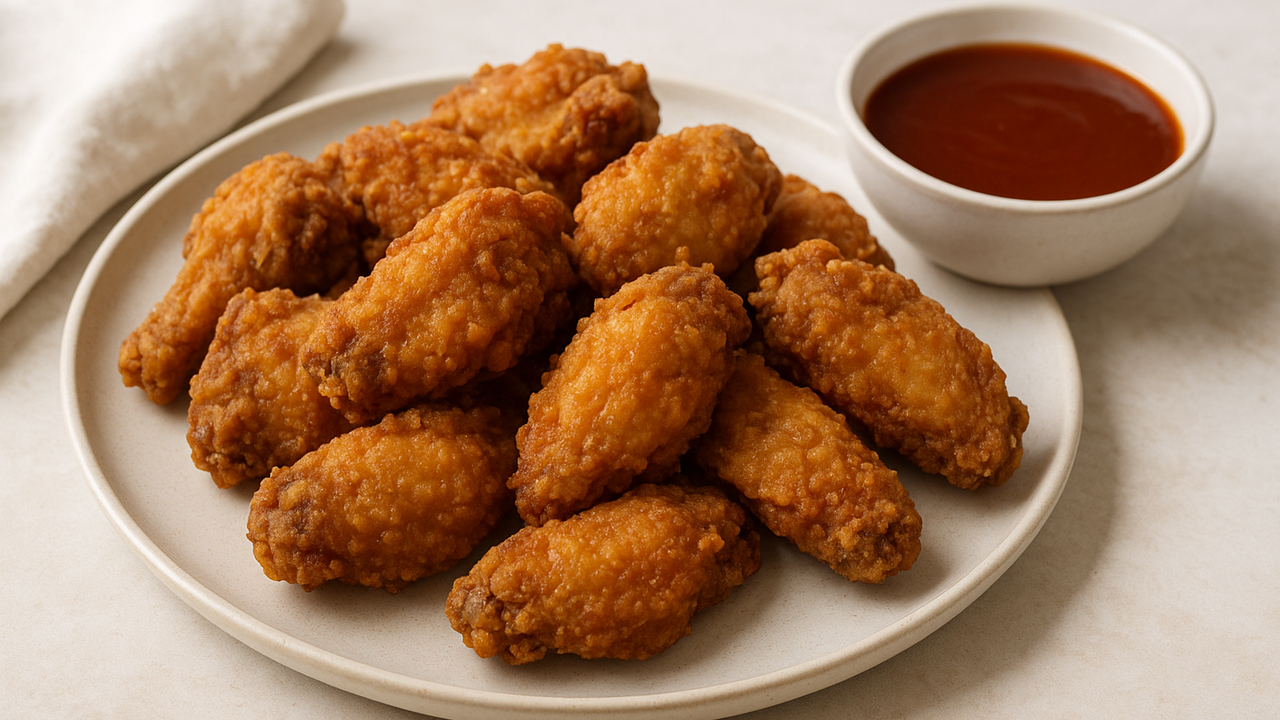
How Long Do You Fry Chicken Wings?
If you're wondering how long to fry chicken wings, aim for about 6 to 8 minutes per side in a hot, lightly oiled skillet, for a total of roughly 12 to 16 minutes. The goal is a blistered crust and a fully cooked center when the wings reach a safe internal temperature.
Starting with dry wings and steady heat helps the crust form instead of steaming in its own fat. Once you nail the timing, you can glaze the wings or dust them with spices for a quick, crowd-pleasing snack. Just Eat Up.
How Long to Pan Fry Chicken Wings on Each Side
Pan frying on medium-high heat gives a fast, caramelized crust. For each side, plan about 6 to 8 minutes, keeping the wings flat against the pan to maximize contact.
Turn the wings halfway through so both sides brown evenly. Watch for color changes rather than timers alone, and adjust heat as you go to keep that steady shimmer of oil rather than deep frying. A cast iron skillet or heavy stainless pan helps maintain even heat, and a light coating of neutral oil prevents sticking without smoking.
Total Cooking Time for Perfectly Crispy Wings
For the total time, you want roughly 12 to 16 minutes overall, depending on wing size and the heat of your pan. Larger, bone-in wings naturally need the extra minutes, while smaller or boneless pieces cook more quickly.
If you start to see the oil dip in temperature or the wings steam rather than sizzle, lift the pan briefly or reduce the heat a notch. Keeping a steady, moderate sizzle is essential for that crisp edge while the interior finishes cooking.
How to Tell When Chicken Wings Are Fully Cooked
The surest indicator is internal temperature near 165F in the thickest part of the wing. Use a quick thermometer and check a few pieces to confirm even doneness; the meat should be opaque and the juices clear.
Beyond temperature, look for a crisp skin and no pink near the bone. Rest the wings for a couple minutes after frying so the juices settle and the texture tightens up. I find that the skin’s firmness, not just the color, helps confirm readiness.
Factors That Affect Frying Time for Chicken Wings
A few variables alter how long to fry chicken wings, so adjust expectations accordingly. Size, whether the wing is bone-in or boneless, and whether the skin is on all influence the timeline.
- Wing size and whether bone-in or boneless affects total time.
- Thaw state, pat-drying, and surface moisture change how quickly the crust forms.
- Pan type, heat control, and batch size shift how evenly and quickly wings fry.
Other factors like oil type and altitude can also play a role, along with how aggressively you want the crust to caramelize. With practice, you’ll learn to read your pan and tune the timing to your stove and your preferred level of crispiness.
Tips to Get Crispy and Juicy Chicken Wings Every Time
Start with dry wings and a light dusting of cornstarch to boost crunch, then maintain a hot, steady sizzle without overcrowding the pan. Keeping surfaces dry helps the crust form rather than steam, and that balance is part of mastering how long to fry chicken wings.
Another trick is to control moisture and oil temperature in steps: pat dry, air-fry or pan-fry in batches, and finish with a brief high-heat pass if you want extra bite. If you like glaze or seasoning, add it after the wings are crusty and hot so the coating sticks without softening the crust. With a little practice you’ll dial in timing for your stove and pan, and for more tasty guides, check out Just Eat Up.